
Somewhere between your first “anti-aging” panic-buy and your tenth dermatologist visit, retinol enters the chat. It’s the ingredient your cool older cousin swears by, the one your aesthetician mentions like it’s a given, the one tucked into half the serums on your shelf.
Retinol is a form of vitamin A that goes onto your skin and tells your cells to behave a little more like they did when you were 23. It’s used to soften fine lines, fade dark spots, smooth texture, and keep pores from getting clogged. Dermatologists tend to call it the closest thing to a proven anti-aging ingredient that you can buy without a prescription. Which is a big claim for something that fits in a one-ounce bottle.
Here’s the short version of how it works. Retinol converts into retinoic acid once it’s on your skin, and retinoic acid speeds up cell turnover (basically, the rate at which your skin sheds old cells and makes new ones). That faster turnover is what fades discoloration, refines texture, and nudges your skin into producing more collagen over time. Some formulas pair it with niacinamide or ceramides to take the edge off the irritation retinol can cause when it’s flying solo. A quick note on who should actually be using this. Retinol shines for anyone dealing with early fine lines, sun damage, uneven tone, or stubborn breakouts that keep cycling through. It’s not for pregnancy, not for the same night as your strongest acids, and not for skin that’s already raw from too much exfoliating. Start low, go slow, and wear sunscreen the next day. Non-negotiable. A good retinol tells you its percentage on the label, buffers itself with hydrators like squalane or hyaluronic acid, and comes in opaque or airless packaging (vitamin A breaks down in light and air, sad but true). Look for encapsulated retinol if you’re new to it, since it releases more gradually and tends to be gentler. Bonus points for a formula that doesn’t smell like a chemistry classroom. One bottle keeps coming up in our notes for hitting all of the above.
The Retinol We’d Start With
 Bundle of La Roche
 See price on AmazonSee on Amazon
Two serums, two jobs, one brand that derms actually recommend without making a weird face. The bundle splits the work: pure retinol handles the wrinkles and sun spots after dark, while the 10% vitamin C serum brightens things up in the morning. Um, so basically you’re not asking one bottle to do everything, which is usually where formulas start to compromise. It’s a sensible pairing. The kind of thing that makes you feel like a responsible adult, which, honestly? Big day for us. Here’s what’s actually in the bottles. The retinol side mixes pure retinol with vitamin B3 (niacinamide) to push surface cell turnover without sandblasting your face. The vitamin C side runs 10% pure ascorbic acid alongside hyaluronic acid for hydration and salicylic acid for a little texture cleanup. La Roche-Posay built both around their thermal spring water base, which is the brand’s whole sensitive-skin calling card. Translation: potent actives, fewer of those mornings where you look in the mirror and think, oh no. This works for people who want results but have skin that throws a tantrum easily. Think: anyone in their thirties with fine lines, leftover sun damage from a regrettable beach phase, and anyone whose previous retinol experience involved peeling like a sunburned tomato. Start the retinol two nights a week and build up; do the vitamin C in the morning under SPF.
1. A Retinal Serum Ten Times Stronger Than Regular Retinol
 MAELOVE Moonlight Advanced Retinal Super SerumSee price on AmazonSee on Amazon

2. Retinol and Ceramides in One Wrinkle-Smoothing Night Serum
 Dr. Denese SkinScience HydroShield Retinol SerumSee price on AmazonSee on Amazon
Retinol serums usually make you choose between having smoother skin or a skin barrier that works. This one is trying to do both by combining retinol with ceramides and peptides. This way, the retinol won't make your skin peel while working on your skin's texture. Dr. Denese has been doing the developed by a dermatologist thing for some time now, and the 4oz. bottle is very generous for a retinol product. It’s best if you use it at night. Start out slow, with only two times a week, and then gradually increase that. Your skin will tell you when it’s ready.
3. Two Antioxidant Serums That Brighten, Plump, and Smooth at Once
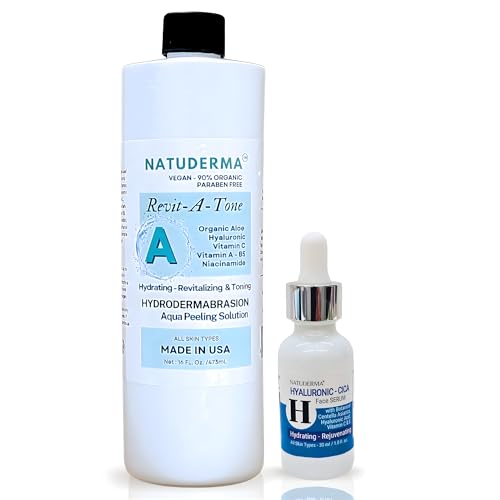 Hydrodermabrasion Solutions | Revitalizing Antioxidant SerumSee price on AmazonSee on Amazon
Hydrodermabrasion may sound like a lot, but it's just a facial in a bottle! This 16-ounce bottle will last you about 94 oxygen facials or 18 hydrodermabrasion treatments. That means you get more than $1,200 worth of services with just one bottle! It’s packed with Vitamin C to brighten skin, Niacinamide to improve glow and Retinol for anti-aging. Plus, it’s all kept hydrated with Hyaluronic Acid, Aloe, and Cucumber. The 1-ounce Hyluronic-C Serum included is super hydrating and cool, absorbs in about a minute, and is paraben-free, vegan, made in the USA, and no animal testing. Actual estheticians use it, so that feels like a small endorsement. Skincare Math, but worth it!
4. One Serum That Hydrates, Exfoliates, and Tackles Fine Lines
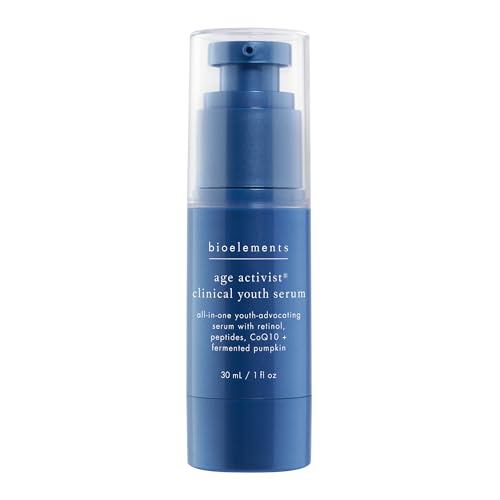 Bioelements Age Activist Clinical Youth SerumSee price on AmazonSee on Amazon
This retinol serum has seven ingredients, which is amazing! Retinol will do the resurfacing, while peptides and coenzyme Q10 target fine lines. The fermented pumpkin will help with exfoliation, so you can skip an acid step (which my routine honestly did not need). Watermelon, apple, and lentil extracts will soften everything so the retinol goes crazy. The texture is a nice surprise. Bioelements literally calls it liquid silk, and it's right. It feels weightless, smells like summer fruits, and layers under SPF without pilling. It is also safe for sensitive and acne-prone skin, which retinol serums usually aren't. That's the whole assignment. Just a thin layer, morning and night.